MONTPELLIER, France, July 8, 2026 /PRNewswire/ -- Tsingke, a provider of integrated life science research solutions, participated in the Antibody Industrial Symposium (AIS) 2026, one of Europe's leading conferences dedicated to therapeutic antibodies and biotherapeutics. At the event, the company presented its latest advances in AI-assisted therapeutic antibody discovery and showcased its comprehensive antibody development platform at Booth #44.
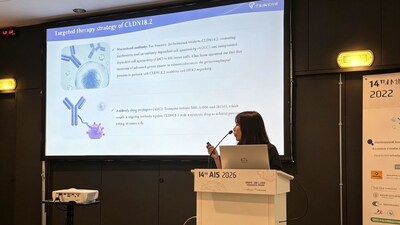
AI-Enabled Discovery of Highly Selective CLDN18.2 Antibodies
As part of the scientific program, Tsingke presented an AI-enabled workflow for discovering therapeutic antibodies targeting Claudin 18.2 (CLDN18.2), an emerging target for gastric cancer and other solid tumors.
The presentation demonstrated how AI-assisted sequence analysis and a proprietary screening strategy improve target specificity by reducing potential cross-reactivity with the closely related CLDN18.1 protein, a longstanding challenge in CLDN18.2 antibody development.
The resulting antibody candidates showed strong specificity and favorable developability, highlighting the potential of integrating AI with experimental validation to accelerate therapeutic antibody and antibody-drug conjugate (ADC) development.
End-to-End Antibody Development Capabilities
In addition to its scientific presentation, Tsingke showcased its integrated antibody development platform, covering multiple stages of biologics discovery and development, including:
"AIS 2026 provided an excellent opportunity to share our latest work in AI-enabled antibody discovery and connect with researchers across the antibody community," said Chuanting Tan, Senior R&D Engineer at Tsingke. "As therapeutic antibody development becomes increasingly complex, integrating computational approaches with experimental validation can help researchers identify and optimize promising candidates more efficiently. We will continue to enhance our discovery and development capabilities to support innovation in biologics research."
Building on these efforts, Tsingke will continue expanding its AI-enabled discovery platform and integrated biologics capabilities to help researchers accelerate projects from early target discovery through protein expression and characterization.
About Tsingke
Tsingke Biotech is a leading innovator in synthetic biology, with a mission to build "the world's great gene factory." Combining proprietary reagents, consumables, and synthesis equipment with AI-driven molecular manufacturing technologies, Tsingke Biotech provides efficient and high-quality Tsynth® gene synthesis services. Its work supports industries ranging from biopharma to agriculture, food, and environmental sciences.
For news and updates, follow Tsingke Biotech on LinkedIn.
Contact: market@tsingke.com.cn
Photo - https://mma.prnewswire.com/media/3004723/image1.jpg
 View original content:https://www.prnewswire.co.uk/news-releases/tsingke-highlights-ai-driven-cldn18-2-antibody-discovery-at-ais-2026--302820235.html

Die Zahl der Demenzerkrankungen in Deutschland könnte bis 2060 deutlich ansteigen und das Versorgungssystem spürbar unter Druck setzen. Nach neuen Prognosen des Wissenschaftlichen Instituts der AOK (WIdO) dürfte die Zahl der Betroffenen bei weiter steigender Lebenserwartung von derzeit rund 1,3 Millionen auf bis zu 2,1 Millionen zunehmen. Grundlage der Berechnungen ist ein kleinräumiges Prognoseverfahren, das das Institut gemeinsam mit den Universitäten Trier, Rostock und Köln entwickelt hat.
Die Analyse reicht hinunter bis auf die Ebene von 400 Kreisen und kreisfreien Städten und macht deutliche regionale Unterschiede sichtbar. Bereits 2020 lag der Anteil der Demenzkranken zwischen 1,0 Prozent in Tübingen und 2,6 Prozent in der brandenburgischen Prignitz. Für das Jahr 2060 erwarten die Forscher eine Spanne von 1,7 Prozent Demenzkranken in München bis zu 6,2 Prozent im Landkreis Elbe-Elster in Brandenburg. Besonders betroffen sind damit vor allem ländliche Regionen im Osten, die überdurchschnittlich altern.
Parallel zur wachsenden Zahl von Demenzfällen schrumpft der Pool potenzieller Pflege- und Betreuungspersonen im Erwerbsalter. Laut Studie kamen im Jahr 2020 rechnerisch noch 38 Menschen im erwerbsfähigen Alter auf einen Demenzfall. Bis 2060 dürfte dieses Verhältnis auf 21 Erwerbspersonen pro Fall sinken. Damit würden deutlich mehr Erkrankte von einer deutlich kleineren Zahl potenziell Erwerbstätiger versorgt werden müssen – mit entsprechenden Konsequenzen für Pflegeinfrastruktur, Kommunen und Sozialversicherungen.
Die Autoren der Studie betonen zugleich, dass der prognostizierte Anstieg nicht zwangsläufig ist. Nach heutigem wissenschaftlichem Stand lassen sich Demenzrisiken durch Prävention spürbar senken. Eine konsequentere Behandlung von Bluthochdruck und Diabetes, der Verzicht auf Rauchen oder ein höheres Bildungsniveau könnten dazu beitragen, etwa die Hälfte der Neuerkrankungen zu vermeiden. In einem solchen Szenario würde sich die Zahl der Demenzfälle im Jahr 2060 nicht weiter erhöhen, sondern sich auf einem Niveau zwischen 1,3 und 1,5 Millionen stabilisieren. Die Spannbreite der Projektionen zeigt damit, wie stark der künftige Versorgungsdruck von heute eingeleiteten Präventionsstrategien abhängen dürfte.