SAN DIEGO, Oct. 14, 2026 /PRNewswire/ -- NueCell Bio, a translational development partner that helps advance cell therapies from scientific discovery to GMP readiness, announced today it has joined the Industry Resource Partnership (IRP) Program of the California Institute for Regenerative Medicine (CIRM), a state agency. The designation, formalized through a Memorandum of Understanding between the two organizations, makes NueCell Bio a resource for CIRM-funded researchers and companies advancing programs from discovery toward translational and clinical-stage development.

California voters created CIRM to accelerate stem cell and gene therapies for people with unmet medical need. Since 2004, Californians have entrusted CIRM with $8.5 billion to support promising discoveries through clinical trials, as well as train a regenerative medicine workforce, strengthen the state's biotechnology economy, and expand access to transformative treatment. According to the agency's own figures, CIRM has funded more than 1,400 projects, attracted more than $38 billion in follow-on industry investment into those programs, and counts more than 50 companies with roots in CIRM-funded work.
Through the IRP Program, NueCell Bio will bring biology-led bioprocessing expertise to CIRM-funded programs at the translational stage between the research lab and the GMP suite, where many of a program's critical design decisions are made, building in manufacturability, analytics and quality while those decisions are still open. The company's 26,300-square-foot Sorrento Valley location supports autologous and allogeneic programs using unmodified cells, or cells genetically modified by viral or non-viral methods, across immune cell (CAR-T, NK, myeloid), stem cell (HSC, MSC, NSC) and pluripotent stem cell (ESC, iPSC) derived therapies, as well as tissue engineering programs. NueCell Bio sits at the center of California's cell and gene therapy community and supports programs both inside and outside the state.
A substantial share of the work sits in complex cell therapy programs, from iPSC-derived products to other advanced modalities. NueCell Bio supports development from cell line selection and characterization through cell banking, process development and analytics, aligning methods with emerging regulatory guidance. That includes moving from 2D to 3D culture and scaling in bioreactors to expand cells while preserving their biology and differentiation, with each lineage's requirements captured accurately. Choices made at the source determine whether a program can be manufactured consistently at scale.
"The question that decides a program's future is no longer just who manufactures it. It's whether it can get to manufacturing at all," said Michael Wourms, Chief Executive Officer of NueCell Bio. "That depends on the quality of the science and on the judgment applied to it long before GMP. NueStack™ turns that judgment into a repeatable foundation, so every program, whether it is immune cell, stem cell, pluripotent or tissue engineering, builds on years of development experience rather than starting from scratch. We're glad to be doing this alongside CIRM and its awardees."
NueCell Bio's proprietary technology stack platform, NueStack™, combines integrated technology layers from iPSC development and gene editing to analytics, manufacturing readiness and technology transfer, tailored to each program needs rather than a fixed sequence.
About NueCell Bio
NueCell Bio is a San Diego-based translational development company that partners with academic institutions, biotechnology companies and pharmaceutical companies to advance cell therapies from early research into clinical development. Its team combines deep expertise in pluripotent stem cell and cell biology, cell engineering and bioprocessing with NueStack, its modular development framework. The company works on a fee-for-service model, from design and development through CMC and technology transfer to GMP manufacturing. It holds no downstream manufacturing capacity of its own, so its advice on manufacturing strategy carries no commercial interest in the answer. For more information, visit www.NueCellBio.com.
About the California Institute for Regenerative Medicine (CIRM)
The California Institute for Regenerative Medicine (CIRM) is a state agency created by California voters to accelerate stem cell and gene therapies for people with unmet medical needs. Since 2004, Californians have entrusted CIRM with $8.5 billion to accelerate promising discoveries through clinical trials, train a regenerative medicine workforce, strengthen the state's biotechnology economy, and expand access to transformative treatments. Today, CIRM is pioneering new models of therapy development and accelerating medical breakthroughs that change lives — in California and around the world. For more information, visit www.cirm.ca.gov.
Media Contact
Connor Halverson
Tel: +1 212 366 4455
Email: connor@thatsnice.com
Business Inquiries
Email: info@nuecellbio.com
 View original content to download multimedia:https://www.prnewswire.co.uk/news-releases/nuecell-bio-joins-cirms-industry-resource-partner-program-to-support-californias-stem-cell-and-gene-therapy-innovators-302907517.html

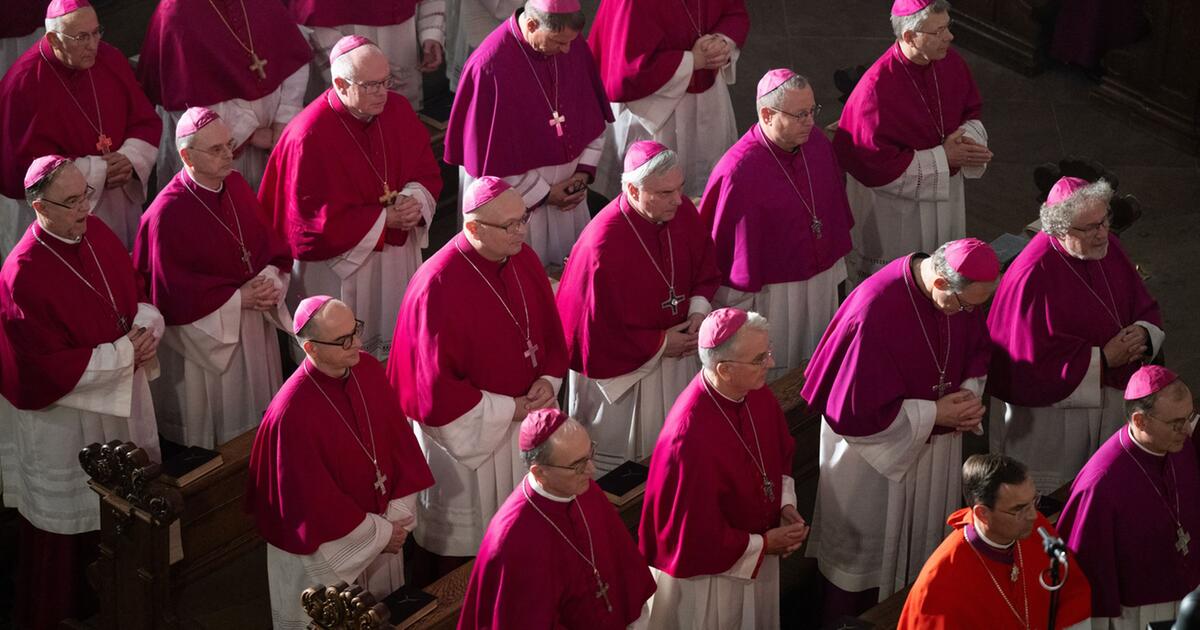
Mit einem Gottesdienst und einer Abschlusspressekonferenz endet an diesem Donnerstag in Fulda die Herbstvollversammlung der Deutschen Bischofskonferenz. Unter der Leitung ihres neuen Vorsitzenden, des Münsteraner Bischofs Heiner Wilmer, haben die katholischen Bischöfe seit Montag eine Vielzahl gesellschafts- und kirchenpolitischer Themen beraten. Auf der Agenda standen Fragen der demokratischen Kultur in Deutschland, die Aufarbeitung sexuellen Missbrauchs, ethische Konfliktfelder wie Leihmutterschaft sowie der Umgang mit neuer Technologie wie Künstlicher Intelligenz. Hinzu kamen innerkirchliche Schwerpunkte wie die Entwicklung der Erwachsenentaufen, die Mitwirkung von Laien und der Einsatz in sozialen Medien.
Deutlich positionierten sich die Bischöfe zum politischen Klima im Land. Wilmer warnte mit Blick auf eine mögliche Regierungsbeteiligung der AfD in Sachsen-Anhalt vor einem „Paradigmenwechsel“. Die Partei stelle die Grundwerte des gesellschaftlichen Zusammenlebens infrage und wolle „ein anderes Deutschland“, sagte der Vorsitzende zum Abschluss der Beratungen. Besonders kritisch sehen die Bischöfe, dass einige Positionen der AfD aus ihrer Sicht mit dem christlichen Glauben und dem zugrunde liegenden Gottes- und Menschenbild nicht vereinbar seien.
Der DBK-Vorsitzende stellte sich demonstrativ hinter den Magdeburger Bischof Gerhard Feige und das Bistum Magdeburg, vor allem mit Blick auf Spekulationen über mögliche Folgen einer AfD-geführten Landesregierung. Diskutiert wird in diesem Zusammenhang, ob etwa der Einzug der Kirchensteuer zur Disposition stehen könnte. Die Kirche müsse „mit allem rechnen“ und stelle sich so auf, „dass wenn große Erschütterungen kommen sollten, wir gewappnet sind“, betonte Wilmer. Es dürfe nicht sein, dass ein Bistum durch politische Weichenstellungen im Nachteil sei.
Die Bischöfe sehen sich zugleich mit einem Stimmungsumschwung in Teilen ihrer eigenen Basis konfrontiert. Nach Aussage Wilm ers ist es „erschreckend“, wenn rund 30 Prozent der Katholikinnen und Katholiken in Ostdeutschland die AfD wählen, die in Sachsen-Anhalt als gesichert rechtsextrem eingestuft ist. Als Antwort auf wachsenden Antisemitismus und gesellschaftliche Polarisierung verweist die Bischofskonferenz auf die jüdisch-christliche Tradition, auf Menschenwürde und Solidarität. Auftrag der Kirche sei es, mit den Menschen zu reden, ihnen zuzuhören und so den gesellschaftlichen Zusammenhalt zu stärken.
Neben der politischen Lage blieb die Kirche bei der Vollversammlung auch mit eigenen Reform- und Krisenthemen befasst. Die Bischöfe berieten über weitere Schritte bei der Aufarbeitung von sexuellem Missbrauch und diskutierten, wie Laien stärker an Entscheidungsprozessen beteiligt werden können. Zudem rückten neue Handlungsfelder in den Blick: Die wachsende Bedeutung von Social Media und der Einsatz Künstlicher Intelligenz in Pastoral und Verwaltung werfen für die Kirche Fragen nach Verantwortung, Transparenz und ethischen Leitplanken auf. Die Beschlüsse und Leitlinien der Konferenz sollen in den kommenden Monaten in den Diözesen konkretisiert werden.