FLORENCE, Italy, May 19, 2026 /PRNewswire/ -- JinkoSolar, the global leading PV and ESS supplier, recently announced today the signing of a major agreement with PM Green, a company active in the development and management of sustainable energy projects. The agreement covers a total collaboration of 1 GW of capacity, including a 200 MW order of high-efficiency Tiger Neo 3.0 photovoltaic modules, aimed at supporting the development of large-scale projects across several strategic markets.
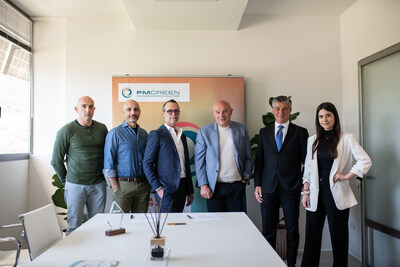
Under the terms of the agreement, JinkoSolar will supply PM Green with 200 MW of Tiger Neo 3.0 modules, recognized for their high performance and reliability, within a broader partnership that includes total supplies of up to 1 GW, together with advanced technological solutions to support the company's initiatives.
"This agreement represents the outcome of a partnership with PM Green that has been built over the years and reflects the joint growth of our businesses, particularly in the European market," said Alberto Cuter. "Our collaboration continues to strengthen thanks to mutual trust and our ability to develop increasingly innovative and sustainable projects together."
"This achievement is the result of a shared journey: a partnership that, year after year, has evolved by transforming collaboration into tangible value," added Andrea Giarolo.
PM Green also expressed enthusiasm for the agreement, emphasizing how the partnership will help accelerate the development of innovative, high-efficiency energy projects in the coming years.
"This agreement with JinkoSolar represents a strategic step for PMGREEN toward increasingly structured growth focused on innovation. Being able to rely on high-efficiency technologies such as Tiger Neo 3.0 modules enables us to more effectively support the development of large-scale projects, strengthening our concrete contribution to the energy transition. It is a partnership built over time, based on a shared vision, reliability, and common sustainability goals," stated Massimo Innocenti.
The agreement reinforces the commitment of both companies to supporting global decarbonization goals, promoting the adoption of clean energy, and contributing to the construction of a more sustainable future.
Photo - https://mma.prnewswire.com/media/2982829/PM_Green.jpg
 View original content:https://www.prnewswire.co.uk/news-releases/jinkosolar-strengthens-collaboration-with-pm-green-1-gw-agreement-signed-including-200-mw-of-tiger-neo-3-0-modules-302775726.html

Ein Zwischenfall mit einem Kleinflugzeug hat am Montagnachmittag den Flugbetrieb am Hamburger Flughafen vorübergehend zum Erliegen gebracht. Eine aus Cannes kommende Maschine setzte bei der Landung mit der Nase auf und wurde dabei beschädigt, wie ein Flughafensprecher mitteilte. Verletzt wurde niemand. Nach Angaben des Sprechers war das Flugzeug in Hamburg gelandet und „dabei zu Schaden gekommen“.
Dem Boulevardblatt „Bild“ zufolge verlor das Kleinflugzeug beim Aufsetzen sein Bugrad und setzte anschließend mit der Flugzeugnase auf der Piste auf. An Bord sollen zwei Personen gewesen sein. Offiziell bestätigt wurden zunächst der Schaden an der Maschine und das Ausbleiben von Verletzten. Um welche Art von Flug handelte, wurde zunächst nicht detailliert erläutert; laut „Bild“ soll es sich um eine Socata TBM-700C gehandelt haben.
Die Beschädigung der Maschine führte dazu, dass der komplette Flugbetrieb in Hamburg zeitweise gestoppt werden musste. Während der Bergung des Flugzeugs und der anschließenden Reinigung der Start- und Landebahn waren weder Starts noch Landungen möglich. „Das muss sehr gewissenhaft gereinigt werden“, sagte der Sprecher. Schon kleinste Trümmerteile könnten beim Starten und Landen gefährlich für andere Flugzeuge werden.
Die betroffene Maschine traf gegen 16 Uhr am Hamburger Flughafen ein. Spezialisten sollen nun untersuchen, wie es zu dem Vorfall kommen konnte. Der Flughafen nahm den Betrieb wieder auf, nachdem das Kleinflugzeug geborgen und die Bahn gereinigt worden war. Mit Verspätungen und Umleitungen war in der Folge zu rechnen, während sich der Verkehr schrittweise normalisierte.